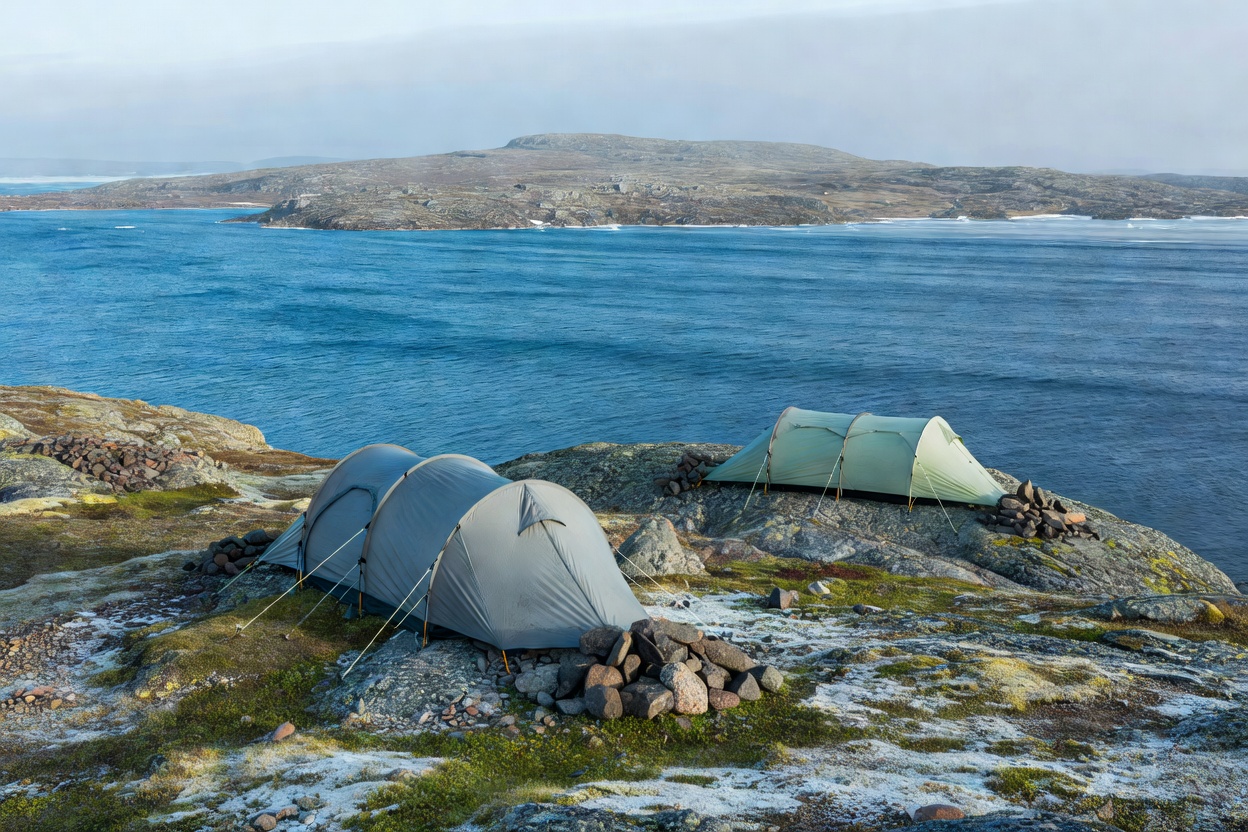
Established Campsites vs. Wilderness Freedom
When traveling in Scandinavia, campers generally balance two distinct modes: established holiday campgrounds (Campingplasser) and wild backcountry pitches.
Established campgrounds provide hot showers, communal kitchens, coin laundries, and electrical hookups. They typically cost between €20 and €38 per tent pitch per night. They are invaluable for drying soaked rain gear after three days of steady sub-polar drizzle, or for washing mud from wool socks before your next expedition leg.
Wild camping, on the other hand, is legal and culturally celebrated across Norway, Sweden, and Finland under traditional access rights—provided you keep at least 150 meters away from occupied residential dwellings or farmsteads, pitch on uncultivated ground, and remain in a single location for no more than one or two consecutive nights. Important: Always verify local municipal variances, national park bylaws, and fire bans before unrolling your bivouac.
Shelter Engineering: Tunnel vs. Dome Tents
You quickly learn why Scandinavian outdoor gear brands design tunnel tents with massive vestibules. When you're stuck in a 40-knot gale above the tree line, pitching the inner and outer tent simultaneously (a staple of Nordic designs) ensures your dry sleeping space isn't exposed to rain while you fumble with pole sleeves.
- Tunnel Tents: Phenomenal aerodynamics when pitched tail-first into the wind. Enormous front vestibules give you a safe, ventilated area to boil water, take off mud-soaked gaiters, and store packs.
- Geodesic Dome Tents: Strong against unpredictable swirling winds in jagged mountain cirques. Free-standing designs make them easier to pitch when granite bedrock makes driving aluminum pegs impossible.
The Sleep System: R-Value & Temperature Realities
The greatest rookie mistake in northern camping is investing in a €400 down sleeping bag while sleeping on a flimsy summer inflatable pad. The cold ground acts as an aggressive heat sink.
Look closely at your sleeping pad's ASTM R-value. For summer camping in southern Scandinavia, an R-value of 3.0 is adequate. If you are venturing into Arctic Lapland, high plateaus, or autumn months, insist on an R-value of 4.5 or higher. Alternatively, stack a closed-cell foam pad (such as a classic accordion mat) beneath an insulated air pad for dual thermal defense and puncture insurance.
Essential Backcountry Camp Kit
Every item you pack should have a dedicated waterproof dry-sack. Never let moisture cross into your sleep compartment.
Cooking, Water & Fire Etiquette
Fast-flowing streams above agricultural lines are generally pristine and frequently consumed directly by local hikers. However, when grazing sheep or reindeer are present in the watershed, treating water with a squeeze filter or a rolling 60-second boil is non-negotiable hygiene.
Campfire Regulations: Between April 15 and September 15, Norway enforces a general ban on open campfires in or near forests and uncultivated woodland, unless the risk of fire is demonstrably impossible (such as rain-soaked snowfields). Sweden and Finland institute rolling fire bans (eldningsförbud) during dry spells. When wild camping, rely exclusively on your backpacking stove; never strip living birch bark or break branches from frail dwarf fells.