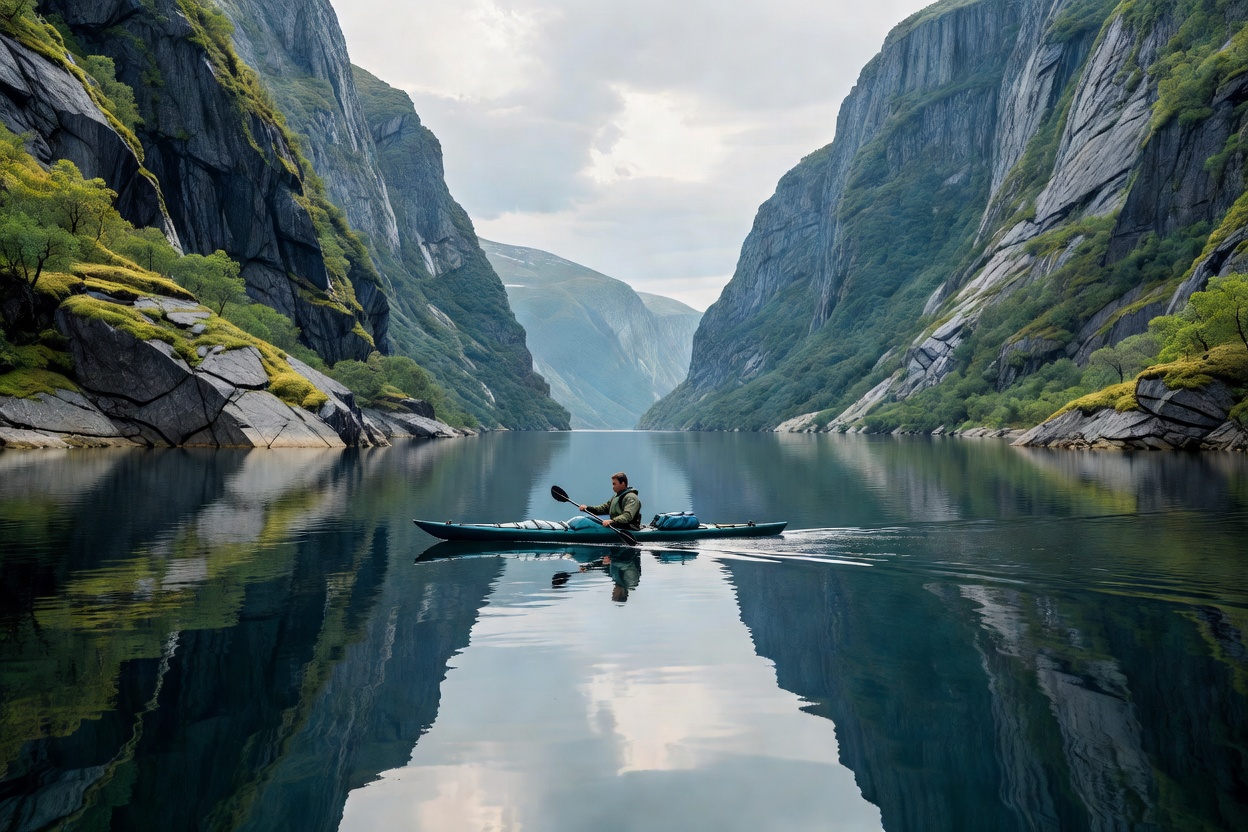
The Northern Waterway Landscape
Northern Europe possesses one of the world's most dense concentrations of interconnected inland waterways, sheltered archipelagos (skjærgård), and deep saltwater fjords. In Finland alone, over 180,000 lakes provide thousands of kilometers of calm, signposted water trails where you can paddle for days without ever battling ocean swell.
Norwegian fjords offer dramatic vertical scale, yet their topography creates distinct aerodynamic wind tunnels. A calm morning can flip into an unrelenting headwind within 30 minutes as thermal breezes draft upward through narrow mountain chasms. Paddling in Northern Europe requires checking marine barometers and wind forecasts twice daily.
The Non-Negotiable: Cold Water Survival
The cardinal rule of northern kayaking is simple: dress for the water temperature, never the air temperature.
In waters below 12°C, cold shock triggers an involuntary gasp reflex that can cause immediate drowning if your head slips beneath the surface without a snug, certified PFD (Personal Flotation Device). Functional drysuits with latex or comfortable neoprene neck and wrist gaskets, paired with merino thermal undergarments, are standard expedition attire throughout Norway and the Baltic Sea outside of shallow, sheltered midsummer bays.
Comparison: Water Environments & Trip Types
| Environment | Water Dynamic | Skill Requirement | Typical Rental Rates |
|---|---|---|---|
| Lake Chains (Finland & Sweden) | Flatwater, sheltered reed bays, zero tidal currents | Beginner-friendly; basic forward stroke & self-rescue | €30–€45 per day (touring single) |
| Fjord Corridors (Norway) | Deep saltwater, mountain catabatic wind gusts, wake from ferries | Intermediate; wet exits, assisted re-entries, eddy lines | €55–€85 per day (requires safety cert) |
| Coastal Archipelagos (Stockholm / Bohuslän) | Open ocean swells outside inner islands, granite reefs | Advanced; nautical navigation, wave surfing, roll mastery | €40–€60 per day |
| Guided Day Excursions | Professionally scouted, all safety gear and drysuits supplied | Complete novice to intermediate | €85–€140 per person (3–5 hours) |
Independent Rental Certification: Våttkort & EPP
If you plan to rent a solo sea kayak independently in Norway, most reputable liveries strictly require a Våttkort (the Norwegian canoe and kayak association certification) or an international equivalent such as Euro Paddle Pass (EPP 2) or British Canoeing Paddle Award.
If you don't possess a safety card, rental stations will typically restrict you to stable double (tandem) kayaks or mandate an introductory guided safety briefing where you demonstrate a wet exit and assisted kayak re-entry. In Sweden and Finland, requirements on calm inland lakes are generally more relaxed, though rental operators will scrutinize your navigation route before handing over spray-decks.
Packing a Kayak for Island Wild Bivouacs
Kayaking provides an enormous packing advantage over backpacking: you don't have to bear 20 kilograms on your spine. However, payload balance is paramount:
- Heavy items low and centered: Place canned foods, stove fuel, and water bladders at the very bottom of the hull directly behind or in front of the cockpit.
- Drybags only: Do not trust kayak hatch covers to remain 100% bone-dry in rolling chop. Divide your kit into multiple small 5-liter and 10-liter drybags, which slide effortlessly into bow and stern tapered spaces.
- Tide and wake precautions: When beaching your kayak on an archipelago islet for an overnight wild camp, pull the boat completely above the high-tide line and tie a bow painter line securely to a granite boulder or stunted pine. The wake of an offshore cargo vessel or ferry at 3:00 AM can easily carry away an unsecured kayak.