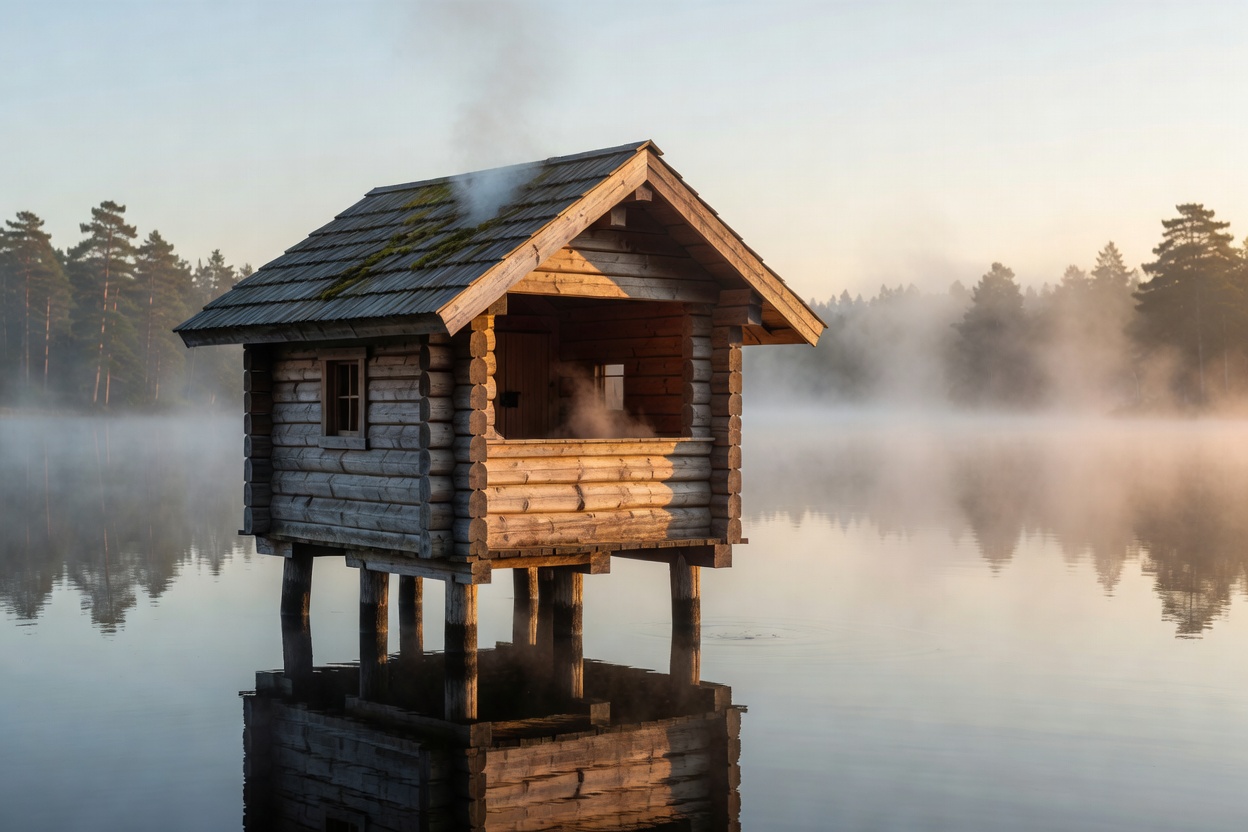
Friluftsliv: Open-Air Living Defined
Coined by the Norwegian playwright Henrik Ibsen in the 1850s, the term friluftsliv translates literally to "free-air life." Yet for modern Scandinavians, it carries no heavy philosophical pretension. It simply describes the natural impulse to step out your front door and spend time in uncurated green spaces, whether that means boiling black coffee over spruce twigs on a Tuesday afternoon or undertaking a fortnight-long cross-country ski trek.
Crucially, friluftsliv is non-competitive. You don't need carbon-fiber gear or a heart rate monitor. The cultural prize is not conquering a peak; it is cultivating quiet contentment, smelling wet pine needles, and feeling the elements against your skin without needing to announce it to the world.
Nature Is Not A Destination
In many western cultures, "nature" is treated as an amusement park you drive to, pay an entry fee for, consume for three hours, and leave behind. In the Nordic psyche, humans are not separate observers visiting nature—we are an ordinary part of the ecosystem. The forest isn't a museum; it is your extended living room, and you treat it with the same respect you'd show a generous host's home.
The Right of Public Access (Allemansrätten / Jokamiehenoikeus)
Perhaps the greatest cultural treasure of Northern Europe is the centuries-old legal tradition granting everyone the right to roam freely across the countryside, regardless of who holds title to the land. Known as Allemansrätten in Sweden, Allemannsretten in Norway, and Jokamiehenoikeus in Finland, it is fundamentally an unwritten social covenant anchored in two balancing concepts: freedom to roam and duty to care.
Under public access rights, you are generally entitled to:
- Walk, ski, cycle, or kayak across uncultivated countryside without permission or payment.
- Pitch a tent for a night or two on uncultivated land, provided you remain well clear of private houses.
- Pick wild berries (bilberries, lingonberries, cloudberries), edible mushrooms, and fallen pine cones for personal use.
- Swim, boat, and anchor temporarily in lakes and coastal archipelagos.
The Boundaries: What Public Access Does NOT Permit
Many international visitors mistakenly believe Allemansrätten means "anything goes anywhere." It does not. The rule is strictly summarized as: "Do not disturb, do not destroy."
- No trespassing near private dwellings: The immediate zone around private homes (known as the hemfridszon or domestic privacy zone) is strictly protected. You must remain out of sight and hearing range, typically 150 meters or more.
- No motorized wilderness travel: Roaming rights apply to muscle power only. You cannot drive campervans, quads, or motorbikes across pastures or fell tundra.
- No commercial exploitation: While you may harvest a basket of chanterelles for dinner, large-scale commercial strip-harvesting is subject to landholder authorization.
- Respect cultivated fields: Never walk through plowed farmland, planted crops, or young timber plantations where fragile saplings can be trampled.
Sauna & Lakeside Recovery Traditions
You cannot discuss Nordic outdoor life without honoring the wood-fired sauna (or badstu in Norway). Far from being an indulgent hotel spa extra, the sauna is an essential wilderness recovery tool. After eight hours of trekking through sideways sleet, stepping into an 85°C cedar or pine chamber, throwing water (löyly) across heated volcanic stones, and subsequently plunging into a glacial lake cleanses both muscle fatigue and mental clutter.
Sauna etiquette is built on equality and humility. Conversation is soft-spoken, status is left outside the timber door with your damp boots, and silence is respected as the ultimate antidote to modern noise.